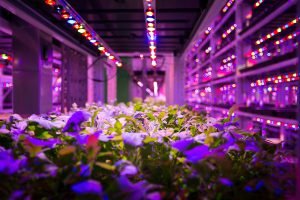
If you’ve heard the term but aren’t familiar with it, or even if you have some idea and are interested in vertical farming, you may not know what it means. This article will explain what vertical farming is, why it’s a growing interest and trend, and why now is a great time to start your own farm inside a modified shipping container.
What is Vertical Farming?
Vertical farming, also known as indoor farming, is the practice and process of growing crops and produce in vertically stacked layers. It uses controlled-environment agriculture (CEA), which optimizes plant growth using soilless farming techniques such as hydroponics, aquaponics and aeroponics.
Indoor farming has grown in popularity, with the the market expected to grow to a $9.7 billion industry by 2026. The global population continues to increase, creating a greater demand for food; this has been one of the main factors towards vertical farming and a growing demand for more locally sourced and grown produce and crop.
Now that you know what vertical farming is, let’s consider why you might want to start your own farm.

Healthier Food, Less Water: 10 Reasons Vertical Farming is Revolutionizing Food Production
1. To Grow a Variety of Crops
Container farming allows crops and produce to grow naturally, regards of location or season. Because container farms are enclosed environments, you can grow various crops without concerns about soil conditions or hazardous weather patterns.
2. To Eat Healthier
Human obesity has tripled worldwide since 1975, with more than 1.9 billion adults over age 18 being overweight. Vertical farming can provide you and your family with fresher, more nutritious, and safer foods. It also means eating more readily available vegetables, leafy greens and microgreens. And if you share your crops, such as selling them at your local farmers market, you’re also helping your community eat healthier.
3. Vertical Farms Conserve Water
Vertical farming uses less water than traditional agricultural techniques. Conventional farms are responsible for 80% of the United States’ total water usage. An average head of lettuce uses 3.5 gallons of water! Depending on the CEA, you could save between 70% and 90% of water consumption, which helps to conserve water usage.
4. To Help Your Community
When you start a vertical farm, you’re starting a local business. You can sell your crops and produce to customers through farmers markets, local restaurants, or even local grocery stores looking to add fresh local produce to their selections. And as your container farm business grows, you’ll also need helpers who can help employ community members.
5. To Join the Local Food Movement
Local food initiatives aim to bring food producers and consumers together to help improve local economies, gain better health objectives, and educate. With a vertical farm, you become a member of the local food movement in your community. You can help promote and advocate for healthier living, sustainability, and more self-reliant and resilient food networks.
6. Vertical Farms Save Money
Starting a business can be expensive. However, it is also tax-deductible. That means you can write off some of the money you make on your farm. Even better, you can also get loans and grants to help you start your vertical farm business, providing you with the equipment to get started.

7. To Offer an Endless Source of Food
We talked about how you can grow various crops that help provide healthier eating habits. This is especially important if you live in a food desert where access to affordable, fresh, and nutritious food is limited or inaccessible. Because you can do vertical farming anywhere indoors, you can provide easier access to food, especially fresh fruits and veggies, so your community can purchase and receive that food.
8. To Farm Safely
Did you know traditional farmers are usually exposed to hazards? They work around farming equipment that can be dangerous when used and exposed to elements that can cause harm, like weather, pesticides, and even pests. Vertical farming helps to eliminate those causes and concerns.
9. Vertical Farms Benefit From Technology
Technology has offered many advantages to farming, including the ability to view data and statistics about your farm through a convenient smartphone or computer app. The same is true for vertical farming. It’s a staple of the industry. CEA systems allow for quick farm checks through a smartphone, which can also control the environment inside the container, warehouse, or wherever you set up your farm.
10. To Supply a Food Desert
“Location, location, location.” That’s a standard saying for real estate agents when it comes to the value of a property which is based on location. And indeed, when people look for places to live, they look at a residence’s location to determine if the area meets their specifications. While ensuring that the physical space for your farm has all the requirements for its operation, you can set up an indoor farm almost anywhere. This is what makes them great, especially for areas that are food deserts.
Food deserts are all over the world, and with the population growth, there is a danger of these growing without proper access to fresh and affordable food.
How Vertical Farming is Developing Around the World
Vertical farming is a food production method that is changing how agriculture is practiced around the world. From North America to Asia, vertical farm operators are innovating and developing new techniques that increase energy efficiency and the quality of yields.
United States
The United States has the most vertical farms in the world, and is the fasting growing market for indoor farming operations. The U.S. benefits from low energy costs when compared with the rest of the world, giving operators a wider margin of profit and making the U.S. an attractive market for new vertical farms. The industry has experienced an immense increase in capital investment, with more than a billion dollars flowing in to companies eager to start farming operations around the country. However, there have been some hiccups along the way, with companies struggling to find profitability due to increased energy costs tied to the Russia-Ukraine conflict and elevated investor expectations due to overestimated future valuations.
China
China has a population of 1.412 billion, second only to India as the world’s most populous country. Urban agriculture has exploded in China, meeting the food needs of an expanding middle class population. China’s agricultural land is some of the richest in the world, but is diminishing in size due to natural disasters and poor land management caused by rapid industrialization. The tallest fully autonomous vertical farm in the world opened in Chengdu, Sichuan in December 2023, positioning China to be a major player in the development of the vertical farming market.
United Arab Emirates
The U.A.E. is pursuing a high-tech path of development, especially in the country’s capital city of Dubai. In 2022, the city’s Al Maktoum International Airport opened a large vertical farm named ECO 1, meeting fresh produce demands in an extremely hot and dry climate. The U.A.E’s geography isn’t conducive to traditional agriculture: only 0.7% of the country’s land is arable, compared to 17.24% in the U.S and 11.60% in China. These numbers aren’t comparable due to the minuscule size of the U.A.E, but demonstrate the challenge of growing food in the country, and give a reason why the small Middle Eastern country is one of the global leaders in vertical farming innovations.

Vertical Farming Summary
Pure Greens container farms can help you design the ideal turnkey hydroponic farm that is efficient and sustainable. We craft indoor container farms from scratch based on your specifications. Our team of in-house modification experts can help you design a custom container to fit your needs. We have a large selection of layouts, sizes and custom options for growing microgreens, leafy greens, herbs and more.
In this article, we answered the question of vertical farming, looked at the market statistics, and discovered a few reasons you should consider starting your farm. Container farms can be created quickly and in many types of environments, such as containers. If you’re considering starting a container farm, contact us for more information.